Understanding Forex Trading: What Beginners Need to Know
Demo Account Trading: Risk-Free Learning Environment
Forex Trading Fundamentals: Pips, Spreads, and Lots
Choosing Regulated Forex Brokers for Safe Trading
Essential Risk Management for Forex Beginners
Currency Pairs: Starting with Major Pairs
Mobile Forex Trading: Platforms and Best Practices
Trading Psychology and Discipline for Beginners
Creating Your First Trading Plan
Common Beginner Mistakes and How to Avoid Them
Continuing Education and Skill Development
Conclusion: Starting Your Forex Journey Responsibly
Frequently Asked Questions About Forex Trading for Beginners
Forex trading for beginners starts with education and practice using demo accounts with virtual money. Learning fundamental concepts including pips (price movement units), spreads (trading costs), and currency pairs (EUR/USD, GBP/USD) forms the foundation of successful currency trading. Begin with major currency pairs and avoid high leverage until experienced, as forex trading involves substantial risk of loss.
This comprehensive beginner forex guide covers everything new traders need to know about currency trading basics, from opening a demo account to implementing proper risk management strategies that protect trading capital.
The foreign exchange market represents the largest financial market globally, with daily trading volume exceeding $7.5 trillion according to the Bank for International Settlements. Unlike stock exchanges with centralized locations, forex operates as a decentralized market where currencies trade 24 hours a day, five days a week across major financial centers worldwide.
For those learning how to trade forex for beginners, understanding the market structure provides essential context. Currency exchange occurs in pairs, meaning traders simultaneously buy one currency while selling another. The EUR/USD pair, for example, represents the euro against the US dollar. When purchasing this pair, a trader buys euros and sells dollars, profiting if the euro strengthens relative to the dollar.
The forex market attracts participants ranging from central banks and multinational corporations to individual retail traders. This diversity creates significant liquidity, particularly in major currency pairs, allowing traders to enter and exit positions with relative ease. However, high liquidity does not eliminate risk — it merely facilitates faster execution of trades.
Beginner forex trading requires understanding that currencies move based on complex economic factors including interest rate decisions, employment data, inflation reports, and geopolitical events. These movements create both opportunities and risks. While the market operates continuously, volatility varies significantly depending on which financial centers are active during different trading sessions.
The accessibility of forex trading through online platforms has made currency markets available to retail traders with relatively small accounts. This democratization, however, comes with responsibility. The same leverage that allows small accounts to control larger positions also amplifies potential losses, making education and risk management non-negotiable prerequisites for anyone considering forex for beginners.
Forex trading involves substantial risk of loss and is not suitable for all investors. Statistics from regulatory bodies indicate that between 70-80% of retail forex accounts lose money. This reality demands careful consideration before committing any capital to currency trading.
Key risk factors every beginner must understand:
The forex market moves rapidly, and losses can accumulate faster than beginners anticipate. Successful forex trading requires not only technical knowledge but also psychological discipline and realistic expectations about potential outcomes.
A forex demo account represents the essential first step for anyone learning currency trading. These practice accounts provide virtual money — typically $100,000 in simulated funds — allowing beginners to experience real market conditions without financial risk. Every regulated broker offers demo account functionality, recognizing its importance in trader development.
What demo accounts provide:
| Feature | Benefit for Beginners |
|---|---|
| Virtual funds ($100,000 typical) | Practice without financial risk |
| Real-time market prices | Experience actual market conditions |
| Full platform functionality | Learn all trading tools and features |
| Unlimited practice trades | Develop skills through repetition |
| Strategy testing environment | Experiment with different approaches |
Risk-free forex learning through demo trading also reveals individual tendencies and weaknesses. Some traders discover impulsive behavior during volatile markets. Others recognize difficulty cutting losing positions. Identifying these patterns in a demo environment allows correction before real capital is at stake.
Virtual money trading should replicate intended live trading conditions as closely as possible. If planning to open a $5,000 live account, practice with a $5,000 demo balance rather than the default $100,000. This approach develops appropriate position sizing habits and creates realistic profit expectations.
The minimum recommended demo practice period spans three to six months of consistent trading. This timeframe allows exposure to different market conditions — trending markets, ranging markets, and high-volatility news events. Rushing from demo to live trading before developing consistent profitability represents one of the most common and costly beginner mistakes.
The transition from demo to live trading requires meeting specific readiness criteria. Consistent demo profitability over at least three months provides the first indicator. This profitability should result from disciplined trading rather than lucky wins on oversized positions.
Transition readiness checklist:
Psychological preparation acknowledges that real money trading introduces emotional pressures absent in demo environments. The fear of losing actual funds affects decision-making differently than virtual losses. Starting live trading with smaller position sizes than demo trading helps manage this psychological adjustment.
Understanding forex pips, spreads, and lot sizes forms the mathematical foundation of currency trading. These fundamental concepts determine profit and loss calculations, trading costs, and position sizing — knowledge essential for any beginner forex trading approach.
A pip (percentage in point) represents the smallest standard price movement in forex trading. For most currency pairs, a pip equals the fourth decimal place (0.0001). If EUR/USD moves from 1.1050 to 1.1051, the price increased by one pip. Japanese yen pairs represent an exception, with pips measured at the second decimal place (0.01) due to the yen's lower relative value.
| Lot Type | Units | Pip Value | 50-Pip Move |
|---|---|---|---|
| Standard | 100,000 | $10.00 | $500 |
| Mini | 10,000 | $1.00 | $50 |
| Micro | 1,000 | $0.10 | $5 |
| Nano | 100 | $0.01 | $0.50 |
The spread in forex trading represents the difference between the bid price (selling price) and ask price (buying price). This spread constitutes the primary trading cost in forex and affects every single trade executed. When EUR/USD shows a bid of 1.1050 and ask of 1.1052, the spread equals 2 pips.
| Currency Pair | Tight Spread | Average Spread | Wide Spread |
|---|---|---|---|
| EUR/USD | 0.5-1.0 pips | 1.0-1.5 pips | 2.0+ pips |
| GBP/USD | 1.0-1.5 pips | 1.5-2.0 pips | 3.0+ pips |
| USD/JPY | 0.5-1.0 pips | 1.0-1.5 pips | 2.0+ pips |
| XAU/USD (Gold) | 20-30 cents | 30-50 cents | 50+ cents |
Spread impact analysis reveals its importance in trading profitability. A 2-pip spread on a standard lot immediately costs $20 upon position entry. Traders must overcome this cost before realizing any profit. Tighter spreads reduce this hurdle, making spread costs a crucial factor in broker comparison and selection.
Position sizing represents the most critical risk management decision in forex trading. The 1-2% risk rule limits potential loss on any single trade to 1-2% of total account balance. This money management approach ensures that even a series of losing trades cannot devastate the account.
Position Size Calculation Example:
Account Balance: $10,000
Risk Percentage: 1% ($100 maximum loss)
Stop-Loss Distance: 50 pips
Pip Value Needed: $100 ÷ 50 pips = $2.00 per pip
Position Size: 2 mini lots (20,000 units)
Risk Per Trade at Different Account Sizes:
| Account Balance | 1% Risk | 2% Risk |
|---|---|---|
| $1,000 | $10 | $20 |
| $5,000 | $50 | $100 |
| $10,000 | $100 | $200 |
| $25,000 | $250 | $500 |
Risk per trade discipline means accepting smaller position sizes than might feel exciting. While profits also remain smaller with conservative sizing, this approach preserves capital through inevitable losing streaks.
Selecting regulated forex brokers represents a non-negotiable safety requirement for anyone entering currency markets. Regulatory protection through established authorities like CySEC provides essential consumer safeguards that unregulated brokers cannot offer.
CySEC (Cyprus Securities and Exchange Commission) is the independent supervisory authority of the Republic of Cyprus. As Cyprus is an EU member, CySEC's regulatory framework aligns with MiFID II, mandating transparency, best execution, and retail client protection. Brokers regulated by CySEC must offer negative balance protection to retail traders, with maximum leverage capped at 1:30 for major currency pairs.
Red Flags Indicating Potential Scams:
Segregated client funds represent a crucial protection offered by regulated brokers. This requirement keeps client money separate from broker operating accounts, ensuring that trader funds remain protected even if the broker faces financial difficulties.
| Criteria | Why It Matters | What to Look For |
|---|---|---|
| Regulation | Fund protection | CySEC or equivalent |
| Spreads | Trading costs | Competitive on major pairs |
| Demo account | Practice trading | Unlimited duration preferred |
| Education | Learning resources | Videos, webinars, guides |
| Support | Problem resolution | 24/5 availability, multiple channels |
| Platform | Trading execution | MT4/MT5 or quality proprietary |
| Minimum deposit | Accessibility | $100-500 range for beginners |
Demo account quality matters for proper skill development. Some brokers limit demo account duration or functionality, while others provide unlimited practice access with full platform features. Beginners benefit from brokers offering comprehensive demo environments that mirror live trading conditions.
Forex risk management represents the most important skill determining long-term trading survival. While analysis methods and entry techniques receive significant attention, risk management principles separate profitable traders from the majority who lose money. This reality makes comprehensive risk management essential for anyone learning how to trade forex for beginners.
The Three Pillars of Risk Management:
Risk-reward ratio analysis ensures that potential profits justify potential losses. A minimum 2:1 risk-reward ratio means targeting profits at least twice the size of the potential loss. This approach allows profitable trading even when winning only 40-50% of trades.
Win Rate vs. Risk-Reward Profitability:
| Win Rate | 1:1 R:R | 2:1 R:R | 3:1 R:R |
|---|---|---|---|
| 30% | -40% | -10% | +20% |
| 40% | -20% | +20% | +60% |
| 50% | 0% | +50% | +100% |
| 60% | +20% | +80% | +140% |
Table shows net result after 100 trades risking 1% per trade
Trading discipline requires following these rules consistently, regardless of confidence level or recent results. Overriding risk management after a string of wins—increasing position sizes or widening stop-losses—often triggers significant losses that erase previous gains.
Stop-loss implementation requires understanding different order types and their appropriate applications. A standard stop-loss order closes the position at market price when the stop level is reached. While this ensures exit, actual execution price may differ from the stop level during fast-moving markets (slippage).
Stop-Loss Placement Guidelines:
Common Stop-Loss Mistakes to Avoid:
Automatic trade closure through stop-losses provides emotional protection alongside financial protection. Traders watching losing positions frequently make poor decisions — adding to losers, moving stops further away, or abandoning risk management entirely. Automatic execution removes these emotional pitfalls from the equation.
Currency pair selection significantly impacts beginner trading experience. Major currency pairs — those involving the US dollar paired with other heavily traded currencies—offer characteristics particularly suitable for those learning forex trading basics.
| Pair | Name | Daily Volume | Typical Spread | Volatility |
|---|---|---|---|---|
| EUR/USD | Euro/Dollar | Highest (~24%) | 0.5-1.5 pips | Moderate |
| GBP/USD | Cable | High (~13%) | 1.0-2.0 pips | Higher |
| USD/JPY | Dollar/Yen | High (~13%) | 0.5-1.5 pips | Moderate |
| USD/CHF | Swissy | Medium (~5%) | 1.5-2.5 pips | Lower |
| AUD/USD | Aussie | Medium (~5%) | 1.0-2.0 pips | Moderate |
| USD/CAD | Loonie | Medium (~5%) | 1.5-2.5 pips | Moderate |
EUR/USD represents the most traded currency pair globally, accounting for approximately 24% of all forex transactions. This pair offers the highest liquidity, tightest spreads, and most predictable technical behavior. Beginners often start with EUR/USD due to abundant analysis resources, manageable volatility, and minimal trading costs.
Why Beginners Should Focus on Major Pairs:
Minor pairs (majors crossed without USD) and exotic pairs (majors crossed with emerging market currencies) present additional challenges including wider spreads, lower liquidity, and less predictable movement patterns. These characteristics make them unsuitable for beginners still developing fundamental trading skills.
Gold forex trading through XAU/USD attracts many traders seeking precious metals exposure. This commodity currency pair represents gold price in US dollars, trading on forex platforms alongside traditional currency pairs. However, gold trading presents distinct characteristics requiring additional consideration.
| Characteristic | EUR/USD | XAU/USD (Gold) |
|---|---|---|
| Typical daily range | 50-80 pips | $15-30 |
| Spread cost | 0.5-1.5 pips | 20-50 cents |
| Volatility | Moderate | High |
| Overnight costs | Low | Higher |
| Recommended for | Beginners | Intermediate+ |
Higher volatility characterizes XAU/USD compared to major currency pairs. Gold can move $20-30 in a single session — equivalent to significant pip movements requiring adjusted position sizing. Traders accustomed to EUR/USD volatility may find gold's larger swings challenging without proper risk management adjustment.
Beginners interested in gold trading should first master fundamentals with major currency pairs before adding XAU/USD. The skills developed trading EUR/USD — risk management, position sizing, platform operation — transfer to gold trading, but gold's unique characteristics require additional learning before successful implementation.
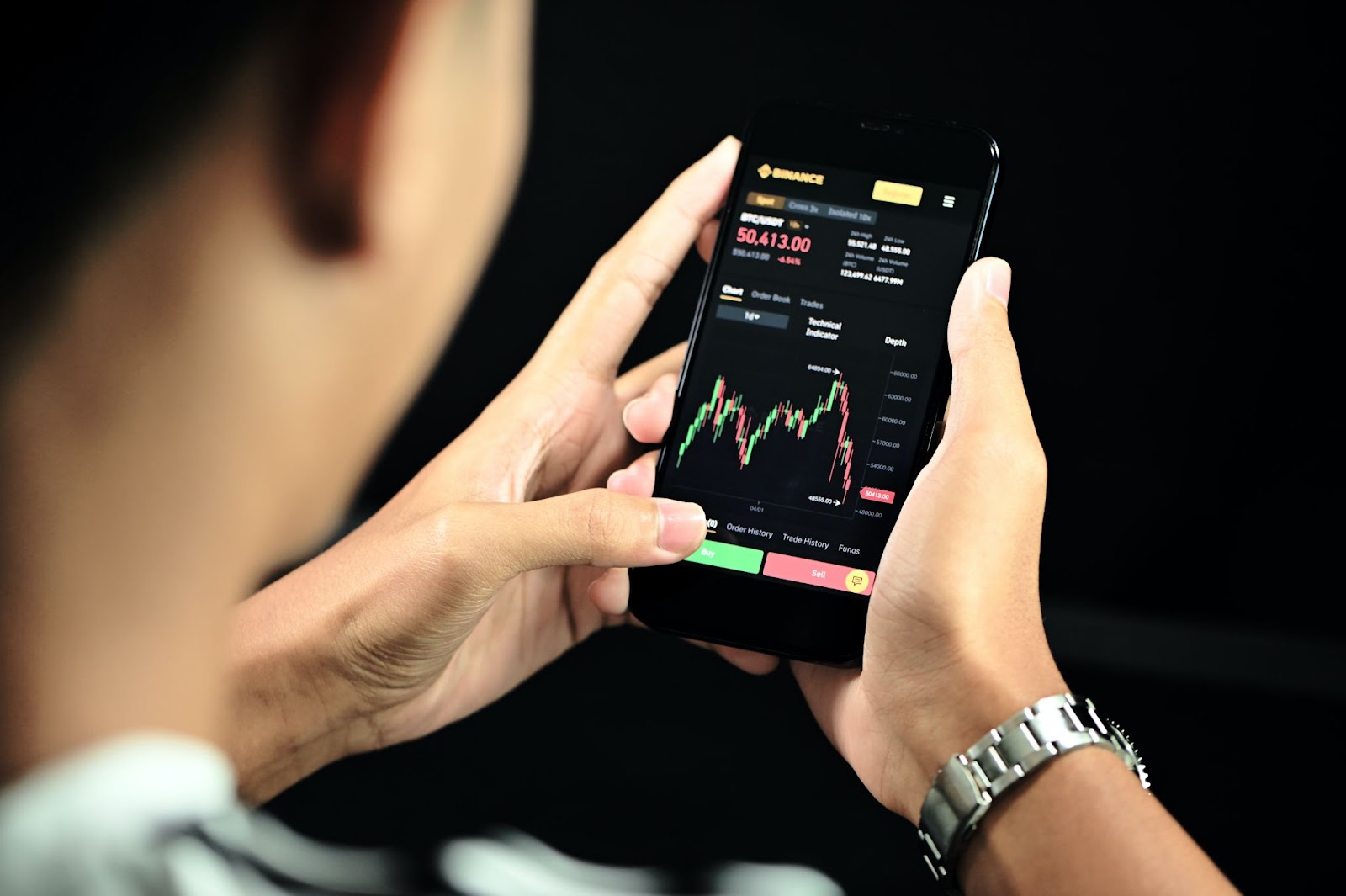
Mobile forex trading has become increasingly prevalent as smartphone capabilities advance. Learning how to forex trade for beginners on the phone enables market access from virtually anywhere, but understanding both capabilities and limitations ensures appropriate mobile trading practices.
MetaTrader mobile applications (MT4 and MT5 for iOS and Android) provide comprehensive trading functionality on smartphones. These forex apps include real-time quotes, interactive charts, full order execution capabilities, and account management features.
| Feature | Mobile | Desktop |
|---|---|---|
| Chart analysis | Limited screen space | Full multi-chart capability |
| Indicator usage | Basic indicators | Complex combinations |
| Order execution | Full capability | Full capability |
| Position monitoring | Excellent | Excellent |
| Detailed analysis | Challenging | Optimal |
| Convenience | Maximum | Location-dependent |
Mobile Trading Best Practices:
Phone trading offers undeniable convenience benefits for monitoring open positions, setting alerts, and executing straightforward trades. However, comprehensive chart analysis and multiple timeframe review become difficult on small displays, making desktop analysis preferable for trade planning.
Forex trading psychology determines success as significantly as technical knowledge or analytical skill. Emotional challenges unique to trading — fear, greed, frustration, overconfidence — undermine even sound strategies when discipline fails. Understanding and managing these psychological factors separates successful traders from the losing majority.
| Trap | Trigger | Consequence | Solution |
|---|---|---|---|
| Revenge trading | Recent losses | Impulsive, oversized trades | Walk away after losing trades |
| FOMO | Missed opportunity | Chasing entries without analysis | Trust your trading plan |
| Overconfidence | Winning streak | Abandoning risk rules | Treat every trade the same |
| Fear of loss | Recent drawdown | Hesitation on valid setups | Focus on process, not outcomes |
| Greed | Profitable position | Moving targets, giving back gains | Honor predetermined exits |
Building Trading Discipline:
Beginner mindset development emphasizes process over outcomes. Individual trade results contain significant randomness — good decisions sometimes lose, poor decisions sometimes win. Focusing on consistent execution of a sound process, rather than individual outcomes, builds sustainable trading psychology.
A forex trading plan provides the structured framework guiding all trading decisions. This documented approach removes improvisation from trading, replacing emotional reactions with predetermined responses to market conditions. Every beginner should develop a trading plan before transitioning to live trading.
Trading Plan Components:
1. Market Analysis Approach
2. Entry Rules
3. Exit Rules
4. Risk Management Rules
5. Performance Review Process
Trade planning helps identify specific setups before market hours. Reviewing charts, identifying key levels, and pre-planning potential trades reduces reactive decision-making during live market hours when emotions run higher.
Understanding forex trading mistakes before making them saves both money and frustration. These common beginner errors, identified through the experience of countless traders, represent avoidable pitfalls that often distinguish struggling beginners from those who progress successfully.
| Mistake | Why It Happens | How to Avoid |
|---|---|---|
| Overleverage | Greed for larger profits | Limit to 10:1 or less voluntarily |
| No stop-losses | Hope market will reverse | Place stop BEFORE entering every trade |
| Oversized positions | Impatience for returns | Calculate position size using 1-2% rule |
| Revenge trading | Emotional reaction to loss | Mandatory break after losing trades |
| Skipping demo | Eagerness to make money | Minimum 3-6 months demo practice |
| No trading plan | Uncertainty about method | Write plan before any live trading |
| Overtrading | Boredom or excitement | Only trade setups matching plan criteria |
| Unrealistic expectations | Marketing hype exposure | Understand 1-5% monthly is professional-level |
The Most Damaging Mistake: Insufficient Education
Trading without comprehending leverage effects, pip calculations, or spread costs guarantees costly lessons. Committing to comprehensive education — including extended demo practice — before risking real capital prevents this fundamental error.
Many beginners expect consistent monthly gains of 20-50%. This unrealistic expectation will either create premature discouragement or drive excessive risk-taking pursuing impossible targets. Understanding that professional traders often target 1-5% monthly returns calibrates expectations appropriately.
Forex education extends beyond initial learning into ongoing development throughout a trading career. Market conditions evolve, new analytical tools emerge, and personal skill development requires continuous attention. Committing to continuous learning separates traders who improve from those who stagnate.
| Stage | Focus Areas | Timeline |
|---|---|---|
| Beginner | Platform basics, terminology, demo trading | Months 1-6 |
| Developing | Strategy refinement, risk management mastery | Months 6-18 |
| Intermediate | Multiple strategies, market psychology | Years 1-3 |
| Advanced | Portfolio management, intermarket analysis | Years 3+ |
Reliable Educational Resources:
Resources to Approach with Skepticism:
Performance review through trading journals provides the foundation for personal improvement. Documenting every trade — entry reasoning, exit execution, emotional state — reveals patterns invisible in the moment. Regular review identifies both strategy effectiveness and execution consistency.
Beginning forex trading requires commitment to education, extended practice, and disciplined risk management before considering live market participation. The journey from complete beginner to consistent trader spans months or years — not days or weeks.
The Responsible Path to Live Trading:
Key Takeaways for Forex Beginners:
Forex trading offers legitimate opportunities for those willing to invest the time and effort required for proper development. The path from beginner to capable trader exists, but no shortcuts bypass the essential steps of education, practice, and disciplined execution.


© 2026 J2T Services Ltd
J2T Services Ltd is authorised and regulated by the Cyprus Securities and Exchange Commission in accordance with license No.281/15 issued on 25/09/2015. The "Just2Trade" trademark is owned by J2T SERVICES LTD.
Registration Number: HE 341520
Address: J2T Services Ltd
Magnum Business Center, Office 4B, Spyrou Kyprianou Avenue 78
Limassol 3076, Cyprus
Disclaimer:
All promotions, materials and information of this website may have applied conditions. Please contact the Company for further details
Trading on financial markets carries risks. The value of the investments can both increase and decrease and the investors may lose all their investment capital. In case of a leveraged product, the loss may be more than the initial capital invested. Detailed information on risks associated with trading on financial markets can be found in General Terms and Conditions for the Provision of Investment Services.
E-mail: 24_support@j2t.com